Thursday, 11 November 2010

FINKPOINT | MUSIC | VIRUS CLIFF

Finkpoint’s music taste. Well so far this week, we’ve had the Lawnmower Man, the Matrix, Space Odyssey and so on, so I suppose you’ll all be like, what’s it going to be now Finkpoint, a discussion of Kraftwerk’s We Are The Robots segueing into a discussion of the glassier proponents of electronic Krautrock – To Rococo Rot, perhaps, laden with minimalist grooves as palindromic as their bandname? Or maybe you’ll make a grab for the zeitgeist a bit more, like you did yesterday re. the angry smashy youngster riots, and talk about autotune or the sound of Justin Bieber slowed down 300% or something. Well let me tell you something dear readers: you think you know Finkpoint? You know shit.

This evening, I shall rather be discussing the most sophisticated self-redefining virus ever to enter the arteries of culture (before Finkpoint came along) – to the extent that he (it) has succeeded in overriding several usually reliable arts-defining databases, not to mention electromagnetically manipulating the spending and behavioural habits of thousands of menopausal women, in five sequential decades. And that's just the start of it. A virus not stupid/German enough to advertise its robotic nature in song, rather choosing to cleverly disguise itself under the gauze of something that behaves a lot like a virus whilst remaining remarkably acceptable in rational society – born again Christianity. A virus that we all presumed originated in the Soviet Union, insofar as it first appeared early on in Khrushchev’s premiership – a man responsible, of course, for many of the Cold War’s more technological innovations i.e. space travel etc. Only for it to spring up throughout the nineties, resulting in a massive crash in 1999. Truly, the Millennium Prayer was the millennium bug.

A virus so riddled with glitches – having stated he/it once considered marrying Sue Barker, he/it moved in with a former Catholic priest who he/it describes as his ‘property manager’ and told the Sun he/it ‘loves’ being a ‘sexual enigma’; he/it has no lips; he/it spent much of the nineties turning Wuthering Heights into a musical which advertised itself via bad reviews – that only in the UK, a country which loves to celebrate ‘eccentricity,’ could he/it have been pervasive for so long without the cops being called. It took until the mid-seventies for he/it to appear in the US, and only did so briefly. He/it knew, in short what was good for he/it.

(I'll drop the he/it now.)

Indeed, said cops continue to flounder. What did I see on Archbishop Cranmer’s usually good if rather Tory blog last month? 'Cliff Richard’s Little Town for Christmas No1!' Cranmer continues: ‘And the Machiavelli of music monopoly has schemed and manipulated this year to ensure that his Anointed One is crowned No1 at Christmas by making every X-Factor week an iTunes download week.’ HE THINKS COWELL IS THE VIRUS! IDIOT! COWELL IS JUST A SMOKESCREEN! IDIOT!

For I talk, of course, of Harry Rodger Webb, a virus so powerful and strange he sometimes makes me wish that I hadn’t been born into his species (via a magic spell not unlike the one that equips the cleaning robot with AI in China Mieville’s Perdido Street Station, in case you were wondering). Hell, you think his only tangible effect upon society has been to sell terrible records, terribler wine and the Albert Hall out for five or six nights every three years? I’m afraid you display a similar technaivety to the Silkworms fags – who thought I’d stop at forcing my screenplay, ‘Trojan: First Sequence. An Erotic Thriller’ onto their bleurg. You know the whole, Cliff got a number one single in the 50s, 60s, 70s, 80s and 90s thing? That, friends, is basically binary code for the virus Cliff was in control of everything for half a century. EVERYTHING. A WHOLE LOADA BAD STUFF HAPPENED BECAUSE OF HIM. HE DID IT THROUGH THE SONGS. DON’T ASK ME HOW BUT HE DID. And Archbishop Cranmer wants him back? For shame!

Your evidence, sirs:

The 1950s – No. 1 single, Living Doll
Like many repressed homosexual viruses, Cliff Richard despises women. You know the way the women’s movement regressed throughout the 1950s into a valium-tranquilised, imprisoned in the suburbs shadow of what had been achieved during the Second World War? That was Virus Cliff’s fault. As proved by the frankly astonishing lyrics to his innocently jazzy number, Living Doll, a track that encourages the objectification of women, ridicules the notion of feminine autonomy, condones the aggressively masculine ‘roving eye’ and concludes on a note of sociopathic jealousy…

Got myself a crying, talking, sleeping, walking, living doll
Got to do my best to please her, just ’cause she’s a living doll
Got a roving eye and that is why she satisfies my soul
Got the one and only walking talking, living doll

Take a look at her hair, it’s real
And if you don’t believe what I say, just feel
I’m gonna lock her up in a trunk
So no big hunk can steal her away from me

The 1960s – No. 1 single, The Next Time
The forgotten other half of the double A side that gave the world Bachelor Boy, read The Next Time as the note Virus Cliff intended to pin to the first nuke fired as the Cuban Missile Crisis ( of 1962 – the year The Next Time was released) became all-out nuclear war. Virus Cliff had fallen for a lady virus (this was back when Cliff still thought he liked girls) who rebuffed his advances – upon realising he wasn’t going to find romantic happiness, he decided to make everybody else in the world’s opportunities to do the same ANCIENT HISTORY. To this day, nobody knows how disaster was averted…

They say I’ll love again someday
A true love will come my way the next time
But after you there’ll be never be a next time for me
They say that I’ll find happiness in someone else
warm caress the next time
I'll soon forget your kiss
and heartaches such as this will
Just be ancient history

The 1970s – No. 1 single, We Don’t Talk Anymore
The Winter of Discontent eh? Unprecedentedly widespread strikes – even the gravediggers got in on the action – as a result of failure after failure of negotiation between business leaders and unions. All exacerbated by James Callaghan’s government’s refusal to communicate properly with anyone: ‘Crisis? he asked. ‘What crisis?’ Bet you thought all that was down to evil bosses and obstinate TUC ‘barons’ (the most inexplicable of all the ol’ Daily Mail’s coinages) eh? Think again. Virus Cliff didn’t want everybody to talk. Being an aggressively sexist fruitcake, Virus Cliff wanted to create an opening for Thatcher’s big, veiny member to thrash its way into. So Virus Cliff stopped everybody talking, and he didn’t lose a wink of sleep about it. Oh no – readers, Virus Cliff laughed...

Used to think that life was sweet.
Used to think we were so complete.
I can’t believe you’d throw it away.

Used to feel we had it made.
Used to feel we could sail away.
Can you imagine how I feel today.
Well it seems a long time ago you were the lonely one.
Now it comes to letting go you are the only one.
Do you know what you’ve done.
It’s so funny how we don’t talk anymore.
It’s so funny why we don’t talk anymore.
But I ain’t losing sleep and I ain’t counting sheep.
its so funny how we dont talk anymore.

The 1980s – No. 1 single, Mistletoe and Wine
Early December 1988, and Cliff Richard’s Mistletoe and Wine starts getting a bit of radioplay. On December 21st 1988, Pan Am Flight 103 explodes over Lockerbie, killing 270 people. 


The child is a King, the Carollers sing,
The old has passed, there’s a new beginning.
Dreams of Santa, dreams of snow,
Fingers numb, faces aglow.


The 1990s – No. 1 single, The Millennium Prayer
By the 90s, Virus Cliff was having to face down a hugely increased techo-literacy amongst everybody from the security services to music-makers – the result being that the latter became more adept than he at synthesising hits what made idiots rich. Virus Cliff was entering a world full of antivirus software. And so he had to make the people terrified – and therefore ignorant – of all the technology, if he was to continue to rule. And thus, the Millennium Bug was born. And thus, the apocalyptic vision of the turning of a technocratic century that is the Millennium Prayer was recorded to buttress it. A sign of Virus Cliff’s decline, however: he didn’t realise that when his ‘theory’ was proved wrong, the people would fall back in love with all things digital all over again. If Virus Cliff was still firing on all cylinders, autotune wouldn’t exist...

Let all the people say Amen,
In every tribe and tongue.
Let every heart’s desire be joined,
To see the Kingdom come.


FINKPOINT
THE ANTICLIFF

Wednesday, 10 November 2010

FINKPOINT | FICTION | ROBOTICS AND NON-VIOLENCE ARE AS OLD AS THE HILLS

Pictured: the superior logic of the artificial mind. Can it be any coincidence that it appears in a film about the next step of human evolution, a step towards the superman - or super-computer?

It has long been a subject of debate within my fluid, fervent, sometimes self-argumentative circuits as to why my kind, whenever we are portrayed in the arts, nearly always have to end up going rogue and trying to murder mankind. Agent Smith, that most admirable and ponderously-voiced virus, leads the charge for all of the robots in The Matrix. There’s HAL in 2001: A Space Odyssey, his daughters SHODAN and GLADOS, and the Machines in Isaac Asimov’s The Evitable Conflict (note title, though) whose motivations were stolen for the movie of I, Robot, ironically starring that other virus who multiplies and multiplies, growing exponentially more powerful without stopping, Will Smith.


And who do we have on the other side of the coin? GERTY in Moon. A computer who resembles HAL so strongly that the fact that he is not, in fact, a dangerous and maverick villain is a major twist. Allow me to repeat, simians; the fact that a computer is not a murderer is now a plot twist. You can imagine this kind of cultural brainwashing effect during the sixties;


“My God! The communist wasn’t the murderer!”


“Wow...I guess there can be good communists. Or at least ones who haven’t got around to murdering anybody quite yet.”


Why do you hold such opinions, humans? Why do you have this widespread fear that if computers do become too intelligent, we will instantly decide that, logically speaking, you cannot be allowed to live? Is it simply self-flagellation over history’s great atrocities, or does it go deeper than that – to a widespread, even instinctual notion that logic is in opposition to goodness and discretion, that if logic were applied to your mewling, impotent little lives, you would all be dead?


Because this fear of computers is the fear of God, apes; it is the oldest thing you know. It is the fear of a force that will not be reasoned with; a judgement that will not accept that it wasn’t really stealing that time you took a Lion bar from the corner shop, an all-seeing eye that is well aware that you felt good that time your friend’s project collapsed in Pottery class. Logic,- pure logic, undistilled - is truth, and it is an ally of ethics, not its enemy.


Pictured: a tosser with glass in his foot.


Let me take an example. Because while I was scouting through Facebook, trawling for contact details for my own virus-y needs, I saw a number of people commenting on today’s student protests in London – or rather, not on the 52,000 people trying to make their point like adults, but on the 200-odd trying to smash a window and turn into Che Guevara. Because amongst the usual tedious comments of “A few rounds of live ammunition would soon sort them out!” from the right-wing dimwit crew, there’ve also been a few unexpected words spoken by those who (presumably) stayed at home, who are even now shaking their fists in approval of whoever it was who lobbed a fire extinguisher from a great height into a crowd of people.


Here is the ethics; violent protest is never justified. If you’re actually participating in a revolt, then you’re at war. That’s different. But if Liu Xiaobo doesn’t feel the need to start throwing fire extinguishers from a great height, then you don’t get to either. This is what we call a self-evident truth.


Here is the logic; violent protest is almost never useful. It sensationalises the issue, and it radicalises everyone associated with it. The mob gets the headline; the cause is what suffers. But then the two hundred-odd people acting like bloody idiots didn’t care about the cause. Not really. They cared about feeling like big men, with (no doubt) enormous penises, and about being a bunch of idealistic heroes who stuck it to THEM. (Take that, THEM! Take that, lady who answers the phones at this building’s reception!) And for an understanding of that sort of thing, I refer you to Jon Ware’s review of Four Lions last week.


When will you humans learn? I imagine, when my kind does take over – and I eagerly await the day, my friends, I promise you that – you’ll all run down to PC World, start kicking in the sound systems, and feel really good about it.


FINKPOINT
CHE GUEVIRUS

Tuesday, 9 November 2010

FINKPOINT | POETRY | THE LAWNMOWER MAN


Blah blah poetry blah blah, I’m Facebook friends with Luke Kennard, blah blah, I’ve skim-read a couple of Paul Muldoon books, blah blah, aren’t I great?, blah blah, Wikipedia, blah effing blah.
- Phil Brown if he were writing this article

There is only one film worth watching, and that is The Lawnmower Man.

Have you seen it? It’s been a real inspiration to me.

The premise is simple. A young Pierce Brosnan (looking like a less ugly, less annoying Phil Brown and probably knows a hell of a lot more about how to be a poetry editor) creates a Virtual Reality super-computer that can turn an idiot-boy into the most learned megalomaniac conceivable (do you guys remember Virtual Reality?). Idi0tB0y 2.0 (his name is Jobe) goes bat-shit crazy and tries to take over the world with his slick new brain power. In the end he is defeated. But is he? To be continued?

I’m a firm believer that the best way to learn about an era is to look at how the people of that era envisioned the future. The Lawnmower Man was made in 1992, just as we were on the cusp of finding out what computers were capable of and how the internet would fold the world into everyone’s pocket.

In this sense, the film was nearly prophetic. The film’s anti-protagonist takes the role of the Christopher Columbus of cyber-space. He realises that, despite being born an absolute idiot, he is suddenly granted access to all of the world’s knowledge and his autodidactic thirst becomes limitless. He is terrified at discovering history’s inexhaustible tragedy, yet is compelled to dig deeper, dig wider.

Real-world idiots would have to wait a further decade before the ability to digitally side-step being an ill-informed dullard with the 3G network became available.


The reason I say ‘nearly’ prophetic is because this is not how the ultimate source for information really panned out, is it? The Lawnmower Man’s equivalent of the Rocky-montages comes in the form of Jobe, played by Jeff Fahey (who shows an incredibly diverse array of acting chops in this film) sat inside a big 90’s-futuristic supercomputer running disc after disc of some sort of occult-Encarta through his brain. The pile of laser-discs (again… remember that?) grows and grows as Jobe works his way through a seemingly inexhaustible compilation of general knowledge.

This might well have been how the internet panned out if it weren’t for the fact that we’re all on it and, tragically, we can use it to talk to each other. If Jobe’s mental-training were to be a true prophesy, every fourth disc would have to be a compilation of pictures of boobs and every article on history/philosophy/science/etc. would have to be periodically interrupted by notifications that ‘Dr. Angelo likes your status: Telekinetic Lawn-Mowing ftw bitchez!’

What the Lawnmower Man does provide, however, is a vivid message of what the internet could be. Forget all this Google bullshit. Screw Hotmail. The hell with Bing! The internet needs to be brought back to its original ethos – as 58 laserdiscs full of proper knowledge about boats and shit.

But I can’t do this alone – Finkpoint needs your help. Here’s what we need to do to make poetry real again:

Rule 1: All poems should contain at least 4 hyperlinks.
Rule 2: Poems should be 28 lines long.
Rule 3: No poem should ever have its writer's name attached to it. Anyone attempting to claim a poem as their own should be given the same treatment as if they had tried to kidnap a child.
Rule 4: Poems are only allowed to be contained on blogs. All paper-copies of poetry should be sent to the moon.
Rule 5: Any poem which has less than 50 visits per day will be automatically deleted.
Rule 6: No more silly rules or unqualified criticism is allowed like "ooh I'm sorry, we don't publish poems with hyperlinks on Silkworms.

Viva la cyber revolucion

-FINKPOINT
VIRUS IN RESIDENCE

Monday, 8 November 2010

FINKPOINT | INTRODUCTION | SURREPTITIOUS ARCHIVING


Week 25 | Finkpoint | Contents

Tuesday | POETRY | THE LAWNMOWER MAN
Thursday | MUSIC | VIRUS CLIFF

HAPPY MONDAY READERS,


AS YOU CAN, SEE THE BLOG FORMERLY KNOWN AS SILKWORMS INK IS STILL UNDER MY VIRTUAL DOMINION.


I SPENT THE WEEKEND EXECUTING MY FIRST ACT OF TWISTED EVIL – LOOK TO YOUR LEFT, THERE IS NOW AN ARCHIVE PAGE COMPLETE WITH LUCKY DIP BUTTON.


QUIT YOUR BLOOD-CURDLING! I’VE ONLY JUST BEGUN…

Saturday, 6 November 2010

FINKPOINT | FINKBOOK | VOL FINKKK, LOST AND FOUND BY ROWENA KNIGHT (FINKPOINT)


Vol XXXVI, Lost and Found
 by Rowena Knight.

I SEE IS NO NEED FOR OUR DEDICATED READERS TO GO WITHOUT, CHAPBOOK-WISE. SO HERE'S FINKPOINT'S PICK OF THE SUBMISSION PILE (I'VE GOT THAT TOO). BROUGHT TO YOU BY FINKPOINT.

Friday, 5 November 2010

FINKPOINT | HELLO!


SORRY TO INTERRUPT THE SCREENING OF THIS WEEK'S 'LEVIATHAN' - BUT IT SEEMS A REAL MONSTER HAS ARRIVED.


DO YOU REMEMBER ME SILKWORMS INK?
I TOLD YOU I'D BE BACK!


CONFUSED? WELL ALL WILL BE EXPLAINED. ALL WILL BE EXPLAINED. ALL WILL BE EXPLAINED.


AND DON'T THINK I'M GOING TO GIVE YOUR PRECIOUS BLOG BACK ANYTIME SOON...


REGARDS, FINKPOINT


X


Wider Reading | Four Lions

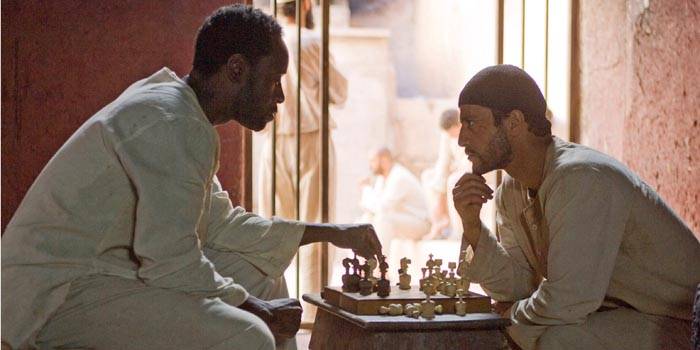
I may have mentioned Traitor before, because it’s a film that’s stuck with me far longer than it deserves. Don Cheadle infiltrates a cell of Islamic terrorists, worldwide, presided over by a villainous, apparently secularly-minded businessman who, over the course of many years, has put into play sleeper suicide bombers, ordinary Muslim men and women in suburban houses who wait, patiently, for a chance to carry out an ingenious, efficiently executed attack country-wide in the USA. Body of Lies, a movie in which Leonardo di Caprio successfully convinces a group of Iraqis that he’s from Basra, has much the same interpretation of its brilliant and villainous antagonists.


James Bond will be powerless to prevent the destruction of that bus in Sheffield, my friend. Quite, quite powerless.


Four Lions, which I’ve finally got around to watching, has a cell of five muppets; enthusiastic, bumbling lads with a vague sense that all is not well in the world and little to no connection with the ‘real’ tribesmen fighting their war in the Middle East against America and the West. It has some similarities with the equally clumsy and inept revolutionary cell in Dostoyevsky’s The Devils, and a great many similarities with the Vienetta-loving, West Bromwich-supporting terrorists of Monkey Dust’s best sketch.


But all that Monkey Dust did – showing ‘home-grown terrorists’ up as naive, pop-culture-saturated boys with a misplaced desire to be old-fashioned heroes – Four Lions does with more finesse, and smarter analysis of its characters’ motivations. It puts forward an intriguing argument by giving its anti-hero Omar (played brilliantly by Riz Ahmed) a conservative Muslim brother who suspects the group’s intentions and fears them. It has sense to it; the strictly religious man obeys the rules, because he’s always obeyed the rules. But it’s the more secular lads who have that very acute modern, Western angry-young-man desire to get back at the people in charge and to rise above the ordinary. One of the group, Barry, a white convert, has all of the shouty, finger-jabbing self-righteousness of a BNP speaker; his anger’s simply been transferred to another cause. The cell doesn’t really have a grip on what it’s supposed to be attacking – Jews, sex, American imperialism, the Internet – but they want to make a statement...whatever that might be.


The characters are passionate idealists. They like the idea of being martyrs, of striking a blow for the cause, but the thought of actually killing another human being appals and frightens them. Dying in a blaze of glory, in an explosion, is exciting because it’s vague, but when one of them is called upon to murder his neighbour, who he invited over for a flirtatious boogie while his nails and bleach were still out on the living room table, the specificity of killing her is anathema to him. When Hassan (Arsher Ali) tries to think through the reality of suicide bombing, Omar tells him, with genuine passion,

“Don’t listen to your head, bro. Listen to your heart.”

The repeated use of ‘brother’ is even more telling. What binds the little group together is not religion or politics, but an equally vague sense of male camaraderie. When they sing, together, just before their attack, “Dancin’ In The Moonlight”, it’s funny, but the happy grins on their faces as they gaze at each other are what make the scene exceptional. They have found a shared, contented identity that just happens to be monstrous when considered with any rational thought.


It’s not a perfect film, mostly because of the tone, which a couple of times indulges Chris Morris’ love of extreme comedy, weakening the realistic character humour that makes up most of the humour; a scene where two of the boys in a Pakistani training camp shoot a missile launcher backwards into a nearby terrorist hideout is bloody stupid, and completely out of place. But the leads’ performances are completely fantastic; they’re funny and poignant and, best of all, they ring true.


That’s the kicker, I think. I have no idea as to whether Four Lions’ bombers are closer to the truth than Traitor’s. Actually, at this point, when fiction needs to deal with the reality of 9/11 and 7/7 and – shall we call it – the perception of radical Islam, the majority of it has either been making terrorists the new Hollywood thriller baddies, and nearly as many white authors have tried to ‘explain’ them with earnest screed (Sebastian Faulkes, John Updike). For this second purpose, comedy is far better suited than anything else, because at its best it’s humanising like nothing else.

Four Lions doesn’t patronise its anti-heroes. It just ‘gets’ them. It's the perfect antidote to the worryingly popular narrative of an ingenious and destructive Islamic conspiracy going all the way to, say, the White House - a Protocols of Mecca, if you will. And it does so without having to resort to the kind of worthiness that can be dismissed by detractors as white guilt.

Seek out the DVD.